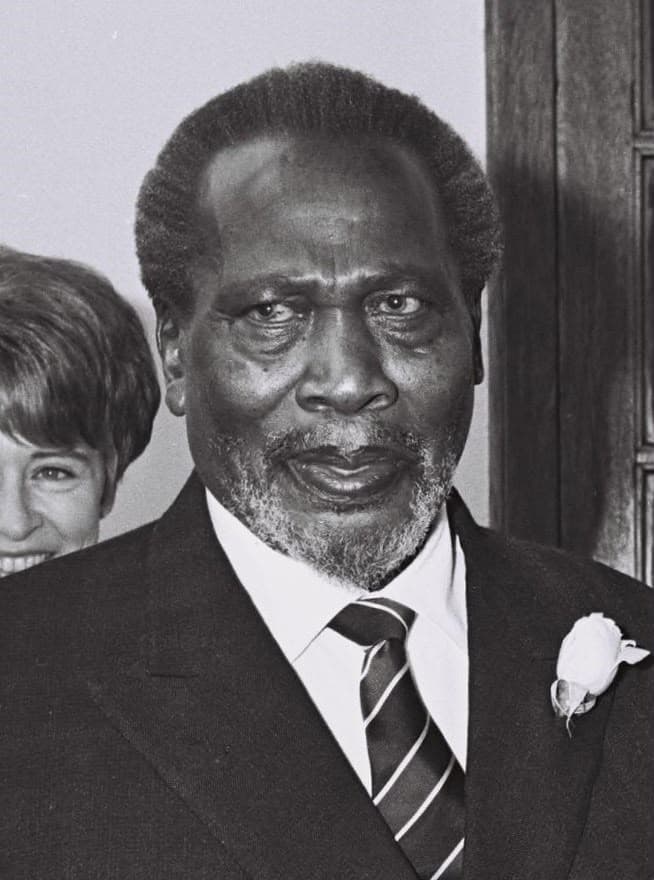
Courage is often demonstrated not only on the battlefield but also through the determination to lead a people toward freedom, unity, and national development. Few African leaders exemplify this more than Jomo Kenyatta, Kenya's first Prime Minister and later its first President.
Born around 1897, Jomo Kenyatta dedicated much of his life to advocating for the rights and dignity of the Kenyan people during the colonial era. At a time when speaking against colonial rule carried significant personal risk, he emerged as a strong voice for self-governance, equality, and African identity. His unwavering commitment to these ideals earned him respect among many Kenyans, but it also came at a great personal cost.
In 1952, during the Mau Mau uprising, Kenyatta was arrested by the British colonial government and sentenced to prison. Although historians continue to debate the extent of his involvement in the uprising, his imprisonment made him a symbol of Kenya's struggle for independence. Even in detention, his resolve remained unshaken, inspiring many who believed in the dream of a free and united Kenya.
Following his release, Kenyatta played a pivotal role in guiding Kenya toward independence, which was achieved in 1963. As the nation's first leader, he faced the enormous challenge of uniting a country made up of diverse ethnic communities while laying the foundations for national development.
Through his leadership, Kenya pursued policies aimed at promoting stability, economic growth, and nation-building during its early years of independence.
Jomo Kenyatta's legacy reminds us that courage is not merely about confronting adversity, it is about remaining committed to a vision despite uncertainty, sacrifice, and opposition.
While scholars continue to discuss different aspects of his presidency and leadership, his contribution to Kenya's journey to independence and nation-building remains one of the defining chapters in African history.
The Southshore C³ Leadership Reflection
At Southshore University College, the Courage pillar of our C³ Framework, Character, Courage, and Competence, encourages students to develop the confidence to pursue what is right, embrace responsibility, and lead with purpose.
Jomo Kenyatta's story teaches us that courageous leaders are willing to make sacrifices for a greater cause. They remain steadfast in their convictions, inspire others through their actions, and work toward creating lasting change.
As future professionals, entrepreneurs, researchers, and public servants, Southshore students are challenged to ask themselves:
1. Will I have the courage to stand by my principles?
2. Will I lead with integrity when faced with difficult decisions?
3. Will I use my knowledge and skills to contribute positively to my community and Africa?
The future belongs to leaders who possess not only knowledge and competence but also the courage to inspire change and the character to lead responsibly.
"True courage is the strength to pursue a vision that benefits others, even when the path is difficult."